
Why Your Hot Water Doesn’t Last: Common Causes and Solutions
There’s nothing worse than the water turning cold halfway through a shower. When a hot water system starts running out sooner than it used to, many homeowners assume the whole unit is finished. Often, it isn’t.
In our experience, the cause usually comes down to one of three things, a failing heating element, a faulty thermostat, or a system that’s simply too small for how your household now uses hot water. Each has different warning signs and a very different fix.
Can a Faulty Element Cause Hot Water to Run Out Quickly?
Yes. A failing element heats water slowly or only partially, so the tank never holds a full supply of properly hot water.
In an electric hot water system, the element sits inside the storage tank and heats the water. Over time, elements can build up mineral scale, deteriorate or fail. Some tanks have two elements, and if one stops working, only part of the tank is being heated.
Signs we often see include:
- water that’s warm but never properly hot
- the tank taking much longer than usual to reheat
- the safety switch tripping on the hot water circuit
Elements run on mains power inside a tank of water, so please don’t remove covers or inspect them yourself. This is a job for a licensed professional.
What Does a Thermostat Do in a Hot Water System?
The thermostat controls water temperature by switching the element on and off. When it fails, heating becomes erratic or stops altogether.
A faulty thermostat might cut the element out too early, leaving water warm rather than hot, or cause temperatures to swing unpredictably. In some cases it can trigger the over-temperature cut-out, leaving you with no hot water at all.
The key difference from a sizing problem is inconsistency. Thermostat faults tend to produce unreliable temperatures, whereas an undersized system delivers properly hot water that simply runs out.
How Do I Know If My Hot Water System Is Too Small?
If the water starts fully hot but runs out at roughly the same point each time, your system may be working correctly but lacking the capacity for your household demand.
We often see this where household life has changed since installation. Common factors include:
- more people in the home
- longer or more frequent showers
- a second bathroom or ensuite being added
- back-to-back showers, or the washing machine and dishwasher drawing hot water at the same time
- new routines, such as working from home or shift work
It’s often more noticeable in winter, when colder incoming water takes longer to heat. Systems on a timer or off-peak tariff may also only reheat at certain times of day.
Replacing an element or thermostat won’t solve this.
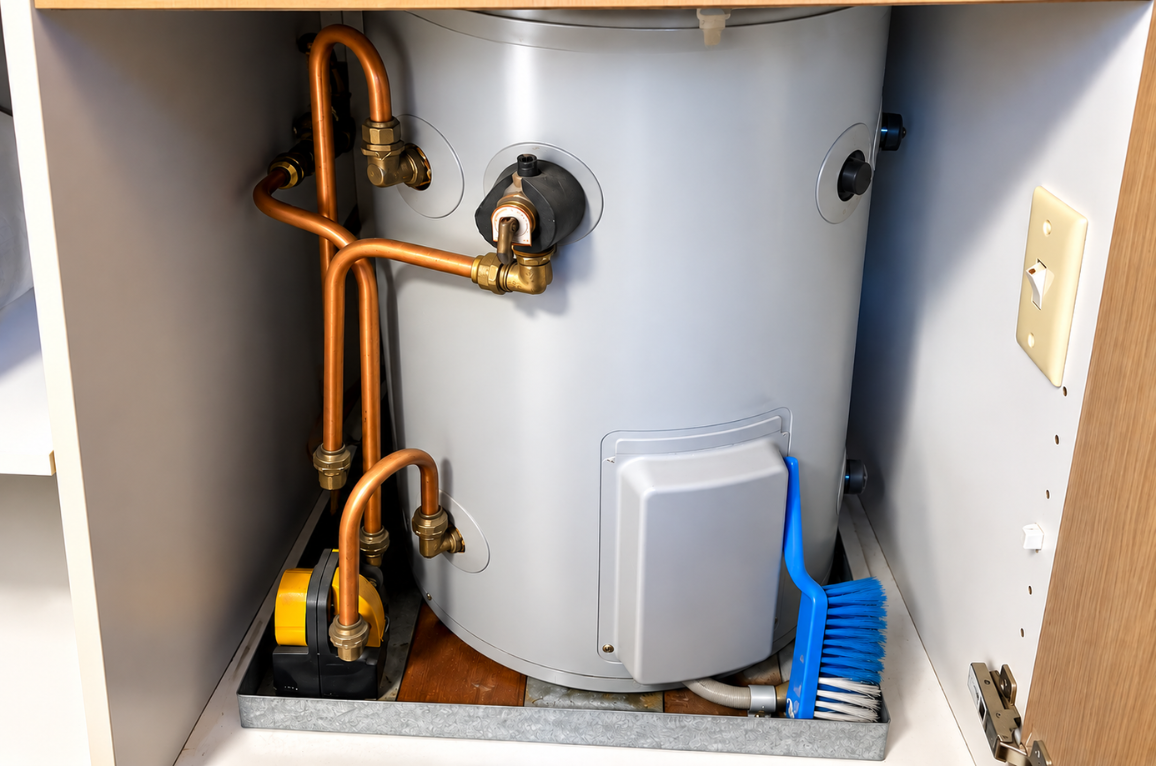
Why Does My Hot Water Run Out So Quickly? A Quick Symptom Guide
- Hot, then cold at a predictable point: likely a capacity issue
- Lukewarm water or very slow recovery: often element-related
- Fluctuating temperatures or no heat at all: could be the thermostat or the element
Because these symptoms overlap, guessing can be costly. A licensed technician can safely test the components and check the condition of the tank, the tempering valve and the system’s overall age before recommending anything.
Should I Repair or Replace My Hot Water System?
Repair usually makes sense when the tank is in good condition and a single component has failed. A new element or thermostat can restore normal performance for far less than a new unit.
Replacement is worth considering when the tank is leaking or corroded, the system is ageing and needing repeated repairs, or it’s clearly too small for your household. If you’re weighing up a hot water system replacement in Perth, have your actual usage assessed first so the new system’s capacity and type match how your household really uses hot water.
Local Help With Hot Water Repairs in Rockingham
As a family-run plumbing and gas business based in Rockingham, our team handles hot water repairs across the local area. We’ll assess how your system is performing, identify the underlying cause and recommend repair or replacement based on your home’s needs.
Get It Diagnosed Before You Spend
Running out of hot water doesn’t automatically mean you need a new system. It could be a single worn part, or a sign your household has outgrown the unit. A proper diagnosis saves you paying for parts or a new system you don’t need.
If your hot water is letting you down, get in touch with RDF Plumbing to book an inspection.
October 13, 2026