
Do Chemical Drain Cleaners Damage Pipes?
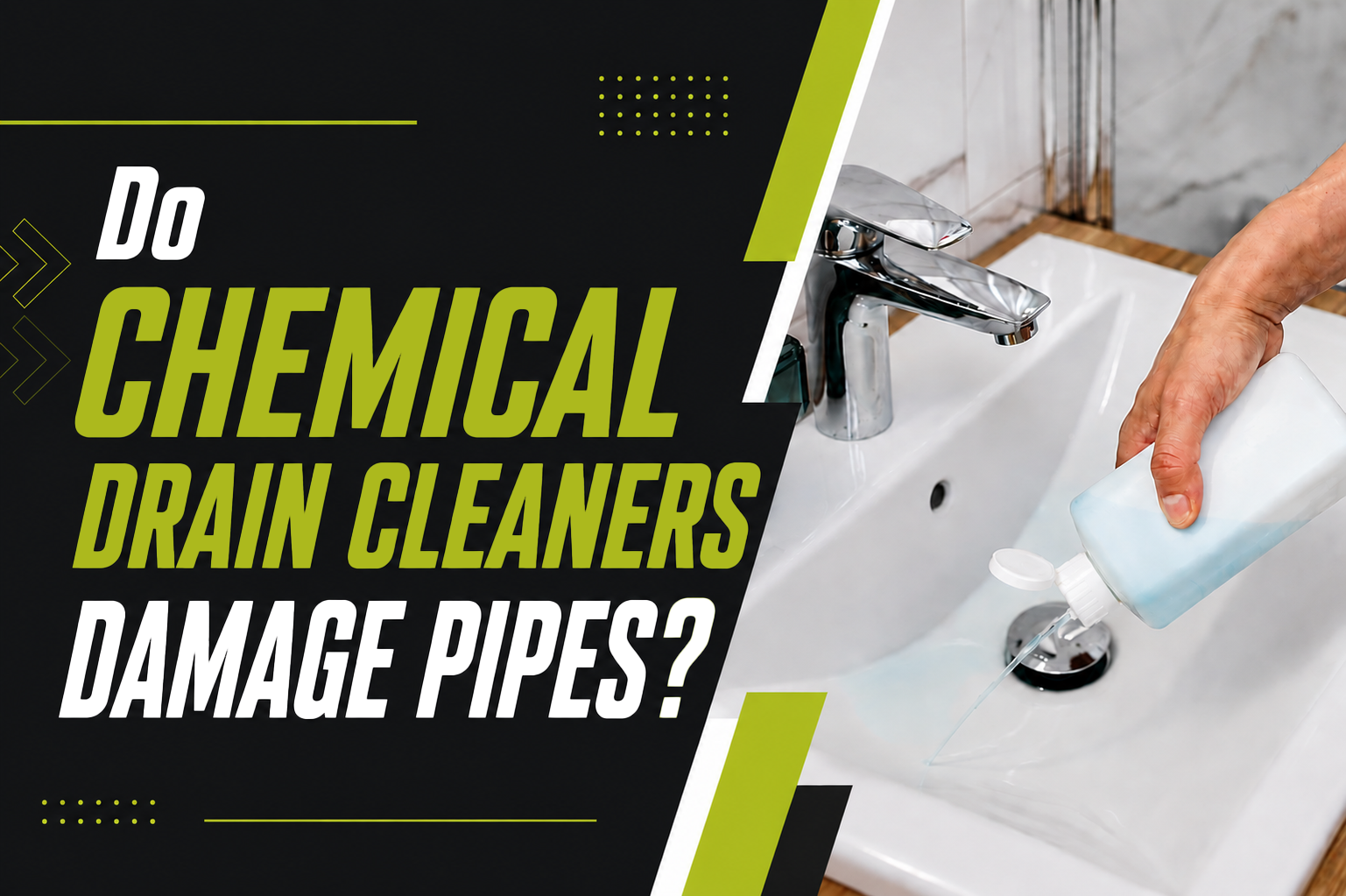
A bottle from the supermarket is the first thing most people reach for when a sink drains slowly. It’s cheap, quick, and sometimes it works. But whether chemical drain cleaners damage pipes depends on what’s in the bottle, what your pipes are made of, and how often you use it.
Here’s what actually happens inside your plumbing and when a different approach makes more sense.
What Are Chemical Drain Cleaners?
Supermarket drain cleaners fall into three groups. Caustic cleaners contain sodium hydroxide or potassium hydroxide. Oxidising cleaners use bleach or peroxides. Acidic cleaners, usually sold to trades, contain sulphuric or hydrochloric acid.
All three attack organic matter, hair, soap scum, fats and food waste. None of them touch tree roots, collapsed pipes or foreign objects.
How Chemical Drain Cleaners Work
Caustic cleaners break fats into a soap-like substance that washes away. Oxidising cleaners strip electrons from the blockage, breaking it down. Acids dissolve organic material outright.
Every one of these reactions is exothermic, it releases heat. In a badly clogged drain where the chemical sits still against one section of pipe, that heat has nowhere to go.
Can Chemical Drain Cleaners Damage Pipes?
Yes, chemical drain cleaners can damage pipes, particularly with repeated use. The heat generated can soften and warp PVC, while caustic and acidic products corrode copper, brass fittings and older galvanised steel. Occasional use on healthy pipes rarely causes harm; regular use accelerates pipe deterioration.
PVC and modern plastics
PVC handles a single dose reasonably well, but sustained heat can distort joints and soften glued connections. Older or sun-affected PVC is more vulnerable.
Copper and metal pipes
Acidic cleaners are the real risk here. They strip protective oxide layers from copper and eat into galvanised steel, leading to pinhole leaks months later. Pipe corrosion of this kind is often only found during leak detection work, well after the cleaner was used.
When Chemical Drain Cleaners Become a Problem
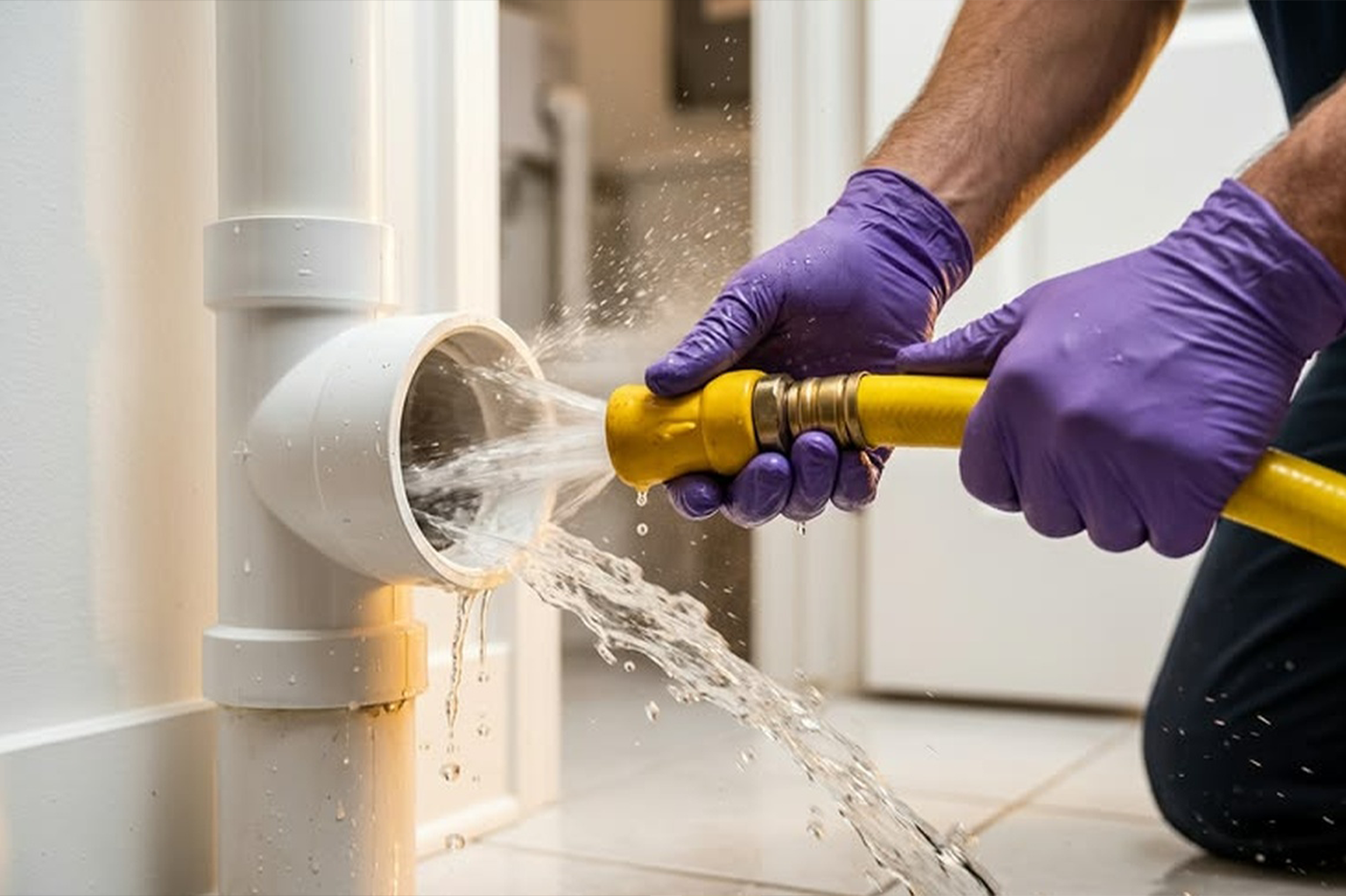
Repeated use can shorten the life of your pipes. Each application leaves residue and thins pipe walls slightly, and the damage accumulates quietly.
Most blocked drains are caused by fat and grease, hair and soap scum, food scraps, wet wipes, tree root intrusion, or damaged and misaligned pipes. Chemicals only address the first few. Against roots, cracked pipes or solid objects, the product pools above the obstruction and sits against your pipework for hours with no benefit.
Repeated blockages in the same fixture almost always signal an underlying problem, not a cleaning problem.
Safer Alternatives for Clearing Blocked Drains
The safest way to clear a blocked drain at home is a plunger, followed by hot (not boiling) water and a drain snake. These methods work mechanically, so they carry no risk of chemical burns, fumes or pipe corrosion.
Boiling water can weaken PVC joints, so keep it hot rather than boiling. Bicarb soda and vinegar helps with minor grease and odours, though it won’t shift a solid blockage.
When to Call a Professional for Blocked Drain Repair
Call a plumber if the blockage returns within weeks, affects more than one fixture, causes gurgling or sewage odours, or doesn’t clear after one attempt. Multiple slow fixtures usually indicate a blocked sewer line rather than a single clogged drain.
A licensed plumber can run a drain camera inspection to see exactly what’s happening inside the pipe, then clear it mechanically or with high-pressure water jetting. That diagnosis matters, a root intrusion needs a different fix to a grease build-up, and blocked drain repair based on guesswork tends to be temporary.
Sewage backing up into the house is an emergency plumber situation, stop using water and call straight away.
How Plumbing Maintenance Helps Prevent Drain Blockages
Most blockages are preventable. Scrape plates before washing, pour cooling fat into a container rather than the sink, and fit hair catchers in showers.
Flush drains with hot water weekly, and never treat the toilet as a bin, wipes labelled “flushable” are a leading cause of blocked drains in Australian homes. Where mature trees sit near sewer lines, a periodic camera check as part of routine plumbing maintenance catches root intrusion before it becomes a failure.
Conclusion
Chemical drain cleaners aren’t automatically destructive, but they’re a temporary fix that treats the symptom rather than the cause. Used repeatedly, they contribute to pipe damage while the real problem develops underground.
If a drain keeps blocking, get it inspected properly. RDF Plumbing provides drain camera inspections, blocked drain repair and preventative plumbing services across Rockingham, Mandurah and the Peel Region.
August 31, 2026